
While looking for care for yourself or a loved one, you’ve no doubt heard the terms “home care” and “home healthcare.” These terms are often confused, but they have very different meanings, and knowing the difference can help you navigate the healthcare system and secure the services you need.
What is home care?
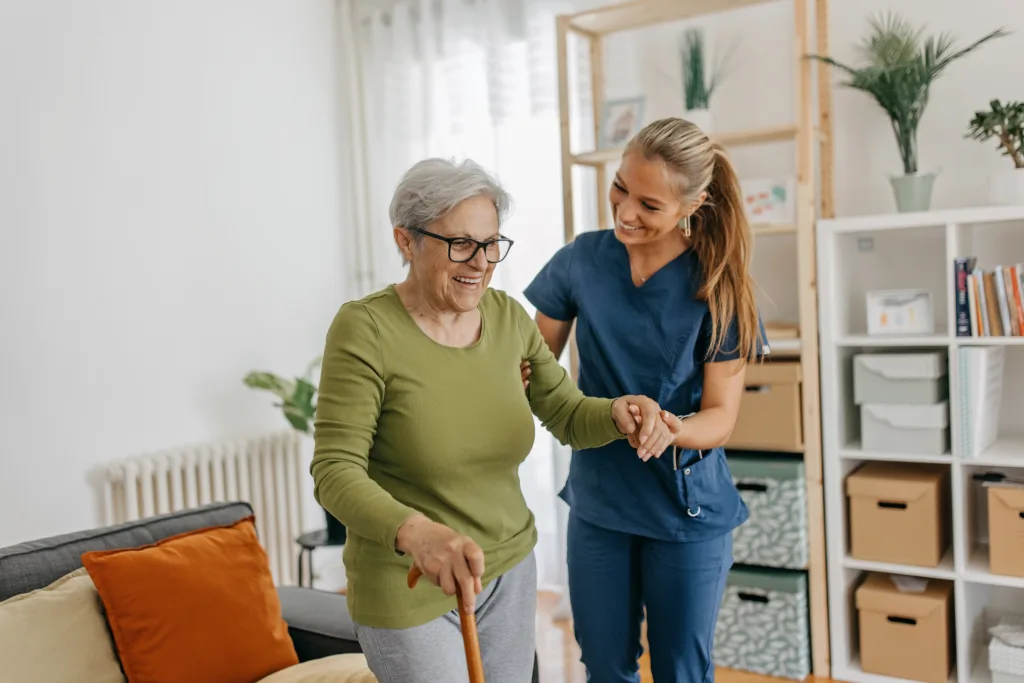
Personal caregiving services, sometimes referred to as home care services, refer to non-medical services provided in the home. These services break down into companion care and respite care and help individuals with activities of daily living – such as bathing, dressing, cooking and transportation.
Companion care services are often used by older adults who are seeking to live a more independent lifestyle, as well as those recovering from an illness, injury or surgery. Mothers who are dealing with difficult pregnancies or have recently given birth can also benefit from companion services, including meal preparation (considering nausea, gestational diabetes or high blood pressure), light housekeeping, post-op C-section care and assistance with walking, moving or bathing.
Respite services are often used by individuals who act as the primary caregiver for their loved one. Defined as an interval of rest or relief, our respite care services offer families an opportunity to take a break from their caregiving responsibilities. This service allows you to leave your loved one in the hands of a dependable respite staff member.
Personal caregiving services are commonly provided by home health aides (HHAs), certified nursing assistants (CNAs), personal care assistants (PCAs), and, in some cases, family members. Families generally pay for personal caregiving services out of pocket or with long-term care insurance.
Medicare normally does not cover the cost of personal caregiving services; however, there are exceptions. For example, if an individual needs personal caregiving services in addition to home healthcare, some may be covered by Medicare. Because patients generally pay for care themselves, there are no eligibility requirements, and care can continue for as long as it is needed and your budget allows.
Home care services
Personal caregiving services are designed to make daily life easier for individuals who need extra assistance. Services often include:
- Help with bathing and toileting
- Assistance with dressing and grooming
- Light housekeeping and other chores
- Meal preparation and feeding
- Medication reminders
- Help with walking, getting in and out of bed or chair
What is home healthcare?
Home healthcare refers to skilled medical services provided by RNs, LPNs, LVNs and therapists in the home. Home healthcare is usually delivered to children and adults with chronic and serious diseases or conditions or recovering from major surgery or injury. Individuals who take advantage of home healthcare receive the same quality of care they would receive in a hospital or skilled nursing facility at a lower cost and in the comfort of their own homes.
You need a referral from your doctor or practitioner to qualify for home healthcare. Once you have a referral, you can look for the best home health agency for your needs. Medicaid, Medicare and some private insurance plans generally cover home healthcare. Unlike home care, home healthcare depends on doctor’s orders, is subject to eligibility requirements, and lasts as long as your doctor certifies.
Home healthcare services
Home healthcare is intended to assist with more serious conditions. You can expect your nurse to help with the following:
- Intravenous or nutrition therapy
- Ventilator and tracheostomy care
- Diabetes management
- Seizure management
- Medication and therapy administration
- Care coordination
- Patient and family education
Maxim Healthcare’s services
Although they are different services, there are many situations in which personal caregiving and home healthcare go hand in hand. For example, someone recovering from a major surgery may need personal caregiving services to help with everyday tasks and home healthcare services to promote recovery. Luckily, Maxim Healthcare provides both personal caregiving and home health services to our patients.
Adult patients commonly use home health, personal caregiving and/or private duty nursing (PDN) services. PDN is frequently used by individuals with traumatic injuries and progressing degenerative diseases such as ALS. Patients and their families have access to on-call support 24/7/365. Adults under our care can receive the support they need to heal and remain independent.
Pediatric patients don’t typically need personal caregiving services, as they have parents or guardians to manage their households; however, they can take advantage of our home health and PDN services. Receiving care in their homes and other familiar settings allows children to spend time with their parents and family members instead of in the hospital. Pediatric care services are intended to help children live fuller lives and make the most of their childhoods.
Read our blog to learn more about our PDN services.
Knowing the difference between personal care and home healthcare can save you a great deal of confusion and stress when securing care for yourself or a loved one. Maxim is proud to provide personal caregiving and home healthcare services to our communities. Getting the right assistance can make all the difference during difficult times, so don’t hesitate to contact your local Maxim office to find out about the services available near you.
